



A manufacturer’s website is the engine behind quoting, ordering, fulfillment, and long-term customer relationships. The same goes for distributors. When your buyers are procurement pros juggling SKUs, lead times, and contract pricing, your website has to work harder than most.
That’s why B2B web design is more than a pretty face for your business; it should be about form, function, and scalability. For manufacturers and wholesale distributors, the must-haves are:
- Deep product catalogs
- Customer-specific pricing and inventory visibility
- Secure portals
- Ecommerce experiences that integrate with internal systems
Americaneagle.com specializes in building all that complexity into elegant, high-performing digital experiences. Whether you’re redesigning a legacy site, syncing with ERP and PIM systems, or launching a smarter customer portal, we’ve done it.
In this article, we’ll walk through our best practices in B2B web design, with real examples and practical takeaways. You’ll learn what to prioritize, what to avoid, and how to turn your manufacturing or distribution website into a competitive advantage.

Why Great Web Design Matters in B2B Manufacturing and Distribution
From long sales cycles to multi-stakeholder buying decisions, your buyers need more than a contact form; they need product and service clarity with assurance.
A well-built B2B website answers a buyer’s needs with information-rich content, intuitive navigation, and tools that make it easy to move forward without a sales rep on the line. Whether checking real-time inventory, browsing technical specs, or placing a repeat order, customers expect digital experiences that work hard.
Design plays a bigger role here than many realize. Poor navigation, slow load times, or confusing page layouts will turn off customers and erode trust.
Buyers now expect the same speed and usability they get from B2C platforms, even in highly specialized industrial environments. Offering a smooth digital experience is good UX (user experience) and gives businesses a competitive advantage.
The right B2B web design turns your site into a self-service hub that can shorten the sales cycle, reduce support tickets, and keep customers coming back.
B2B Web Design Best Practices That Drive Results
Strong B2B websites do more than list products; they guide users, build trust, and support complex buying decisions. Below are proven B2B website design best practices tailored to the needs of manufacturers and distributors.
Prioritize Clear and Immediate Value Propositions
B2B buyers don’t have time to decode what you do. Your homepage should make it obvious. Use a strong headline that spells out your offering. Pair it with hero images that show real products, facilities, or use cases. Reinforce credibility with visuals that signal innovation, precision, or reliability, whatever makes your value tangible.
Design for User-Centric Navigation and Product Discovery
Many industrial sites fall apart when users try to find what they need. Avoid that. Use mega menus, super filters, and smart search tools to simplify exploration. Organize products by category, application, or industry served. No one wants to endlessly scroll looking for parts or click on individual product pages to see specs. Design for the way engineers and procurement teams actually work.
Mobile Optimization is a Must
Mobile optimization is crucial, especially in manufacturing. Field reps, buyers, and decision makers rely on their phones or tablets.
Ensure every page, from product listings to contact forms, is responsive. Include click-to-call and quote request buttons. And don’t overlook page speed; laggy load times can cost you leads. Invest in a website performance audit to see how your site stacks up.
Integrate Ecommerce and Online Ordering Capabilities
Industrial buyers increasingly expect to place orders online and submit reorders even faster.
Robust B2B websites include customer portals, tiered pricing, and integration with ERP or inventory systems. Role-based permissions and custom pricing rules help scale operations without losing control.
Showcase Extensive Product Catalogs Effectively
A large catalog is a strength, but only if it’s usable.
Give each product the real estate it needs: images, technical specs, and application notes. Add filters for size, material, and part numbers. Include downloadable assets like PDFs, CAD files, or MSDS sheets to support engineers and buyers.
Leverage Trust Building Elements for Industrial Buyers
As we’ve said, high-value B2B sales require confidence. Your website should prove you're the right partner.
Highlight ISO certifications, industry awards, and years in business. Mention distribution networks or global reach. Show testimonials, case studies, and recognizable logos to make your credibility visible.
Integrate SEO and Content Strategy from the Start
Your web design should support discoverability, not fight against it.
Build keyword-driven category and product pages. Publish helpful blog content on topics like compliance, process efficiency, or safety. Offer downloadable guides that position your brand as a true partner, not just a vendor.
Real Examples of High-Performing B2B Manufacturing Websites
The best way to understand great B2B web design is to see it in action. These real world examples from Americaneagle.com’s manufacturing and distribution clients show how complex needs can be translated into powerful digital experiences.
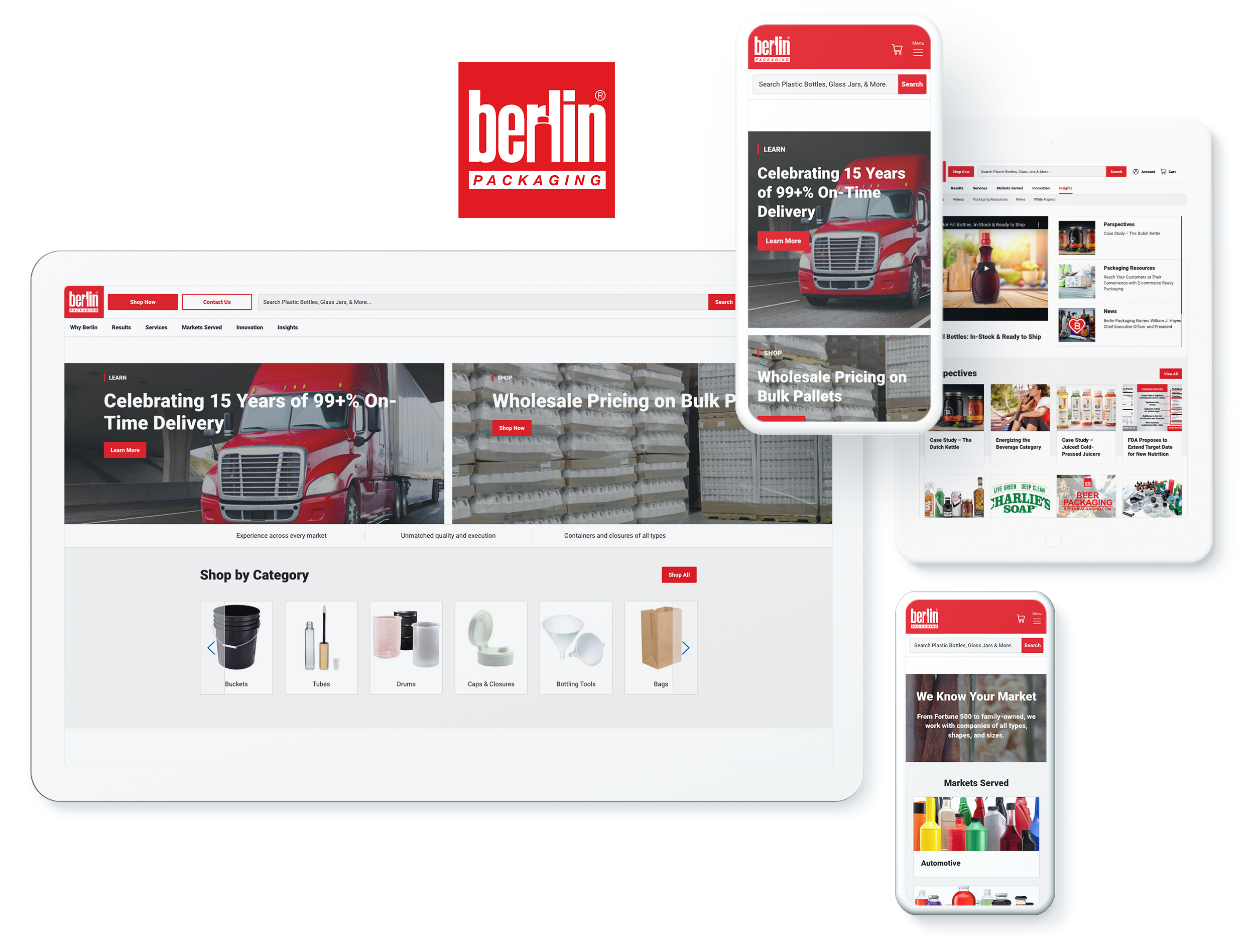
Berlin Packaging – Scale Without Sacrificing Speed
- Industry: Rigid and hybrid packaging for B2B and B2C markets
- What Works: Berlin Packaging’s site offers B2B buyers a fast, commerce-ready experience with easy navigation for a large variety of services and products. It feels modern and agile like a platform built to scale.
- Takeaway: Enterprise websites can still feel nimble. Don’t let complexity slow the user experience.
View the Berlin Packaging website project
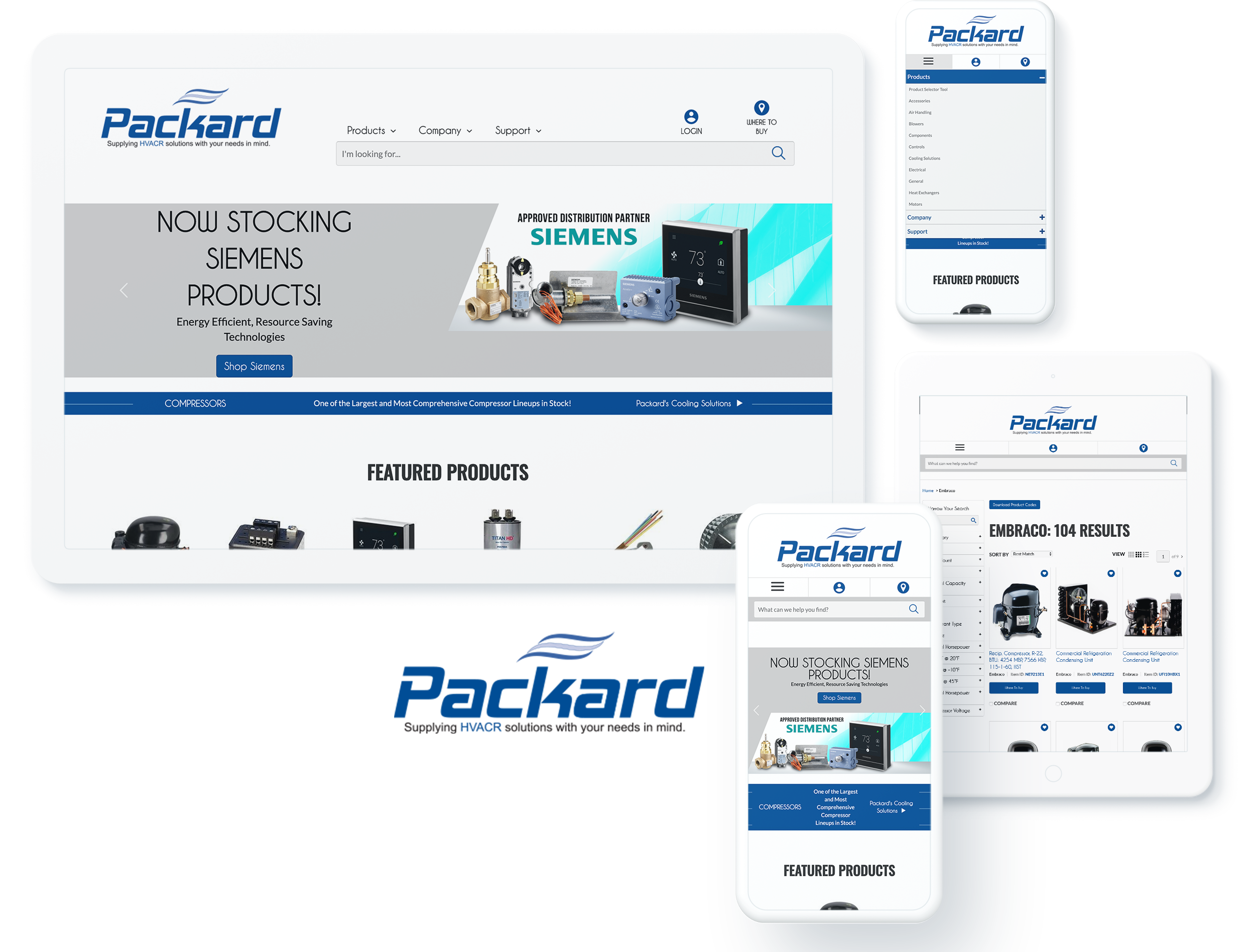
Packard – HVACR Revamped Ecommerce Site
- Industry: HVACR motors and components for OEMs and distributors
- What Works: Packard’s website supports an expansive product line with advanced filtering, an intuitive interface, and mobile-friendly navigation. Now, on the ROC Commerce platform, it fully meets the needs of Packard clients. The site blends sleek UX with deep technical content, making it easy for contractors and engineers to find exactly what they need.
- Takeaway: Even highly technical products can be easy to browse when filters and content are built around the user.
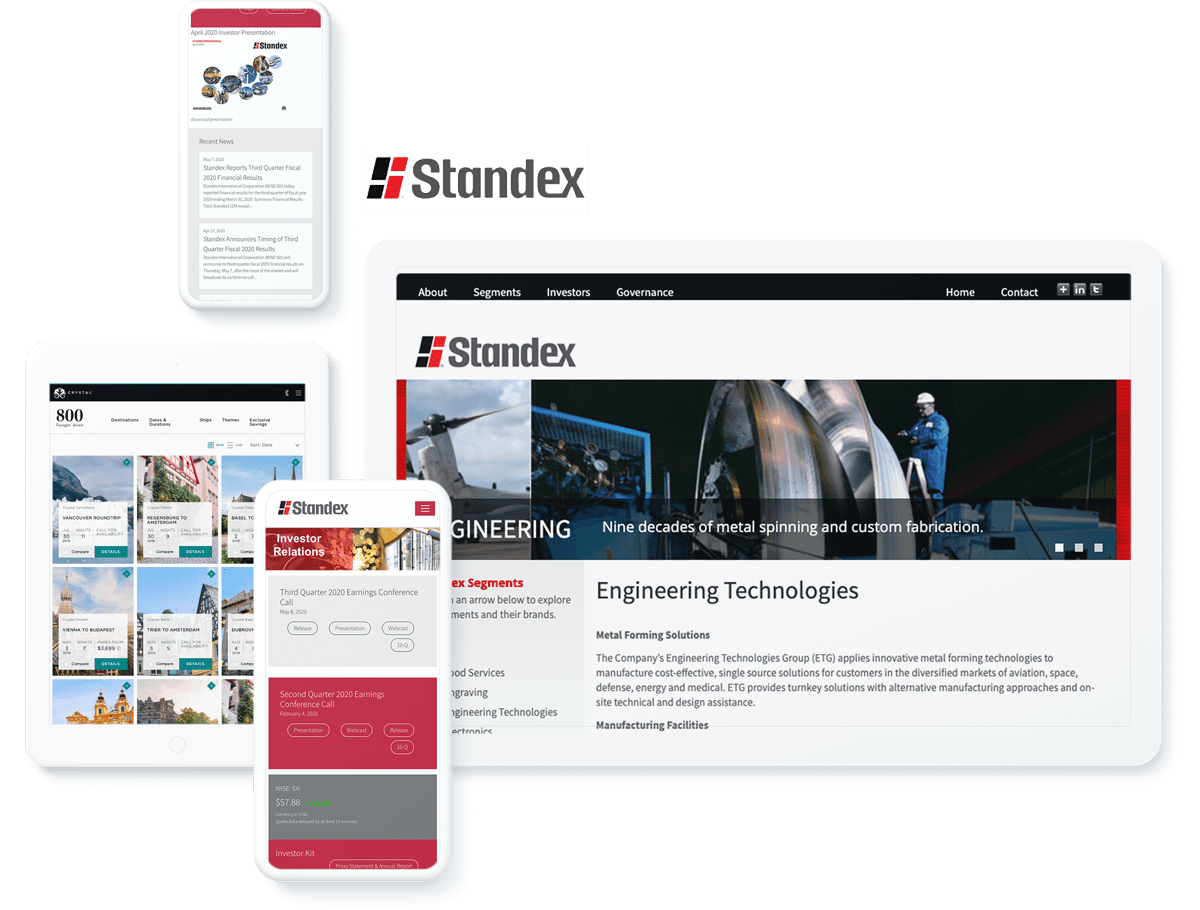
Standex Engineering Technologies Group – Engineering Depth Meets UX Clarity
- Industry: Engineered metal joining solutions
- What Works: The Standex site balances detailed technical information with a clean, modern interface. Thoughtful design and clear navigation ensure engineers can find documentation and capabilities without friction.
- Takeaway: Technical doesn’t have to mean complicated. Great B2B websites present depth without overwhelming the user.
View the Standex Engineering Technologies Group project
Common Pitfalls in B2B Website Design for Manufacturers
Even well-established industrial brands fall into common traps that limit website performance. Here’s what to watch for:
- Overly technical copy with no UX support. Specs are essential, but buyers need context and clarity to move forward.
- Poor product discovery tools. Outdated PDFs and long dropdowns aren’t enough. Without filters or smart search, customers give up.
- Lack of mobile readiness. Slow, unresponsive sites frustrate mobile users, especially field reps and decision makers on the go.
Avoiding these issues is just as important as getting the features right. Clean design and functionality go hand in hand.
Building a Stronger B2B Web Presence for Manufacturing and Distribution
For manufacturers and distribution businesses, the opportunity is clear: a B2B website is a marketing asset and a tool for sales, service, and growth. Whether you’re managing thousands of SKUs, enabling self-service, or syncing with complex back-end systems, the right digital foundation can drive results.
Looking for a partner to help you get there? Americaneagle.com brings decades of experience delivering B2B web design services that solve real challenges in manufacturing and distribution areas.
Ready to Transform Your Digital Presence?
Contact our team to discover how we help manufacturers and distributors streamline operations, elevate customer experience, and increase revenue through better B2B website strategy and design.
For further reading, explore our insights: