


When a B2B customer visits a manufacturer or distributor’s website, they’re there with a clear intent: to solve a business problem. Unlike B2C buyers, B2B buyers don’t typically stumble upon a website and impulsively purchase. They’re on your website because it’s their job to find an exact product that helps them get their work done.
Is your website integrated with the right third-party tools to ensure your B2B customers are finding exactly what they need to do their jobs?
While a site search tool is key for helping buyers locate the right products, the foundation of a great search experience is often overlooked. Efficient product information management (PIM) is the backbone of a seamless search experience. For industries like manufacturing, PIM ensures that customers can quickly and accurately find the products they need.
Whether your audience is searching for B2B product information management solutions or asking, “What is product information management?” your website should be equipped to deliver the answers they need.

What is Product Information Management (PIM) and Why It Matters in Manufacturing
What is PIM? Product information management (PIM) is a software solution that helps businesses efficiently manage product information and enrich related digital assets across teams. It ensures a consistent, engaging product experience while enabling businesses to successfully sell products across multiple marketing and sales channels.
PIM acts as a single source of truth, powered by master data and process-driven workflows, to collect, manage, govern, and enrich product information. It then distributes this data seamlessly across sales, marketing, ecommerce platforms, and other channels.
Examples of PIM Integration
PIM integrates with essential tools like:
- ERP systems to synchronize technical data, inventory, and pricing.
- Digital Asset Management (DAM) platforms to manage and distribute product images, videos, and other media.
- Ecommerce platforms to ensure accurate, localized product data is displayed to customers.
How PIM Supports B2B Use Cases
For B2B businesses, PIM is critical in managing complex product data and meeting the unique needs of buyers. Key benefits of PIM for B2B include:
- Technical data management: Centralizing and standardizing specifications, dimensions, and compliance information.
- Pricing accuracy: Ensuring up-to-date and region-specific pricing for different markets.
- Localization: Supporting multilingual product descriptions and region-specific content to cater to global audiences.
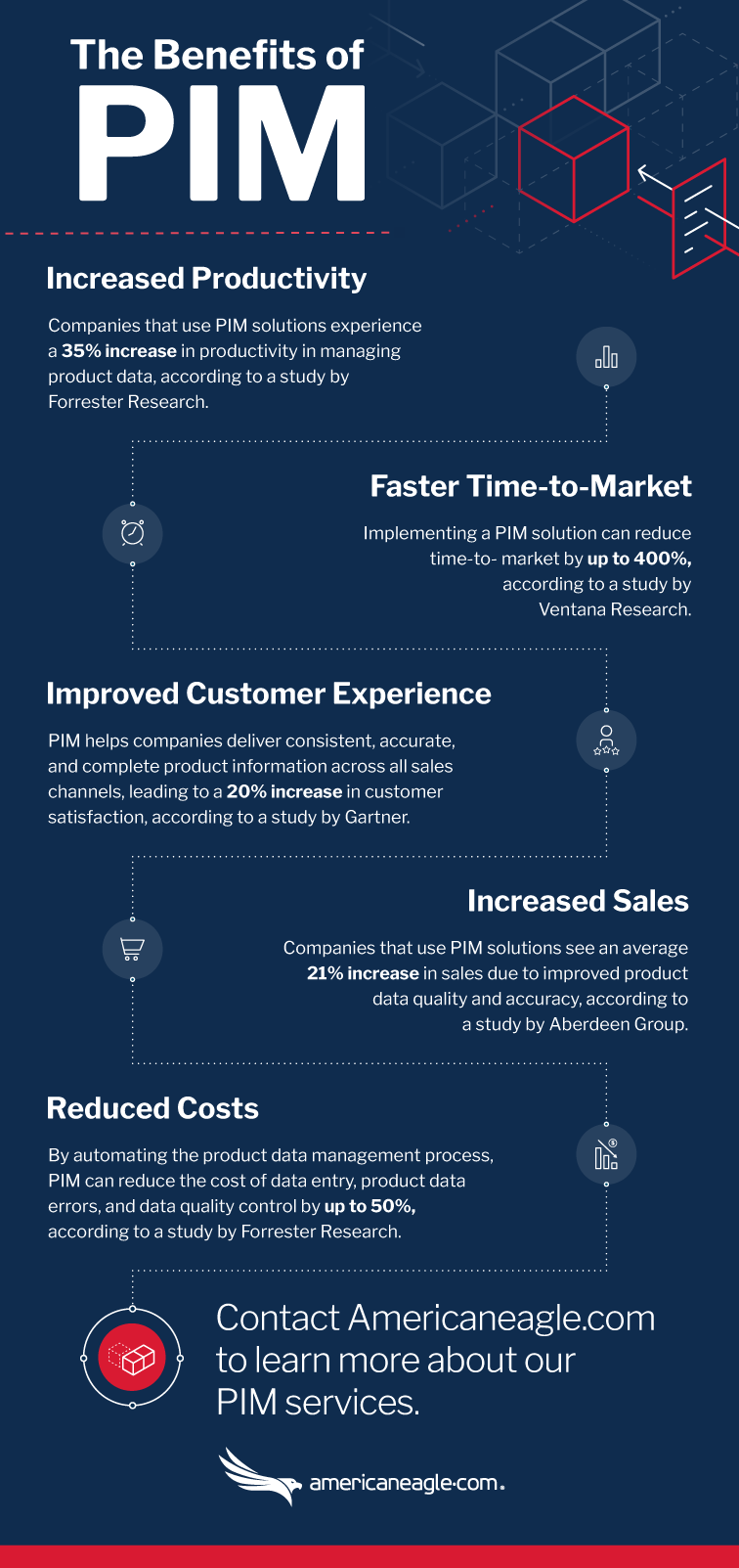
The Foundation for Digital Product Data Consistency
PIM is the backbone of consistent, high-quality digital product data. It eliminates silos, reduces errors, and ensures that every channel – from your website to your ecommerce store – delivers accurate, enriched product information.
Whether you're exploring what is product information management, understanding product information management in business, or looking to manage product information more effectively, the product information management benefits are clear: streamlined operations, improved customer experiences, and increased sales efficiency.
Product Information Management for Manufacturing Companies: Strategy & Market Trends
A Strategic Approach to Product Information Management for Manufacturers
Manufacturers today face mounting pressures to adapt to digital transformation, meet the demands of B2B ecommerce, and reduce time-to-market for their products. These challenges are driving a shift toward more innovative, strategic approaches to managing product data. At the heart of this transformation is product information management (PIM) – a solution designed to unify fragmented data, enhance product quality, and streamline operations.
The Role of PIM in Manufacturing Strategy
In the evolving product information management market, manufacturers are leveraging PIM solutions to address key industry challenges:
- Accelerating time-to-market: By centralizing and automating product data workflows, PIM reduces delays caused by manual processes and data inconsistencies.
- Supporting B2B ecommerce growth: PIM ensures accurate, enriched product data is delivered across ecommerce platforms, enabling manufacturers to meet the expectations of B2B buyers.
- Driving digital transformation: PIM integrates with ERP, DAM, and ecommerce systems to create a seamless digital ecosystem, empowering manufacturers to adapt to changing market conditions.
Trends Shaping Product Information Management for Manufacturers
- Digital Transformation: Manufacturers are embracing digital tools to unify data silos, improve operational efficiency, and enhance decision-making.
- B2B Ecommerce Expansion: The rise of B2B ecommerce has heightened the need for accurate, localized, and enriched product data to meet buyer expectations.
- Time-to-Market Pressure: With increasing competition, manufacturers are prioritizing faster product launches and streamlined workflows to stay ahead.
Product Information Management Best Practices
To maximize the benefits of PIM, manufacturers should adopt these product information management best practices:
- Centralize product data: Use PIM as a single source of truth to eliminate data silos and ensure consistency across all channels.
- Automate workflows: Leverage PIM to automate data enrichment, localization, and distribution processes.
- Focus on scalability: Choose a PIM solution that can grow with your business and adapt to new market demands.
- Integrate with key systems: Ensure your PIM integrates seamlessly with ERP, DAM, and ecommerce platforms for a unified digital strategy.
By adopting a strategic product information management strategy, manufacturers can not only meet the demands of today’s market but also position themselves for long-term success. PIM is no longer just a tool – it’s a critical component of a manufacturer’s digital transformation journey.
What Challenges Does PIM Help Solve for Manufacturers?
Solving Product Data Challenges with a Product Information Management Solution
Manufacturers face significant challenges when managing and showcasing their products digitally. The complexity of fragmented product data, manual workflows, and multi-channel requirements often creates inefficiencies and inconsistencies that can hinder growth.
The Problem: Fragmented Data and Manual Workflows
One of the biggest hurdles manufacturers encounter is the sheer volume of product data that must be collected, organized, and updated. Product information often resides in multiple systems, such as ERP, CMS, and CRM platforms, leading to data silos and manual workflows that are time-consuming and error-prone. For example, distributors may require product data in specific formats, while partner portals demand tailored content – creating additional layers of complexity.
The Solution: Streamlined Product Information Management Workflow
A product information management solution consolidates data from various sources into a single, centralized database. This allows manufacturers to:
- Manage product information such as descriptions, specifications, images, and pricing in one place.
- Ensure accuracy and consistency across all channels, reducing errors and improving customer trust.
- Automate manual workflows, saving time and resources.
Multi-Channel Complexity: Meeting Diverse Requirements
Manufacturers must also meet the unique product information requirements of multiple sales channels, including:
- Ecommerce platforms: Optimizing product data for online stores to enhance searchability and conversions.
- Distributor portals: Providing accurate, formatted data to meet distributor needs.
- Marketplaces: Customizing product information to align with marketplace standards and attract buyers.
With a PIM solution, manufacturers can tailor and distribute product data to each channel efficiently, ensuring their products are represented accurately and attractively.
Real-World Example: Distributor and Partner Portals
Consider a manufacturer supplying products to distributors and partners. Each distributor may require product data in a different format, while partner portals might need localized content or specific technical details. A PIM solution simplifies this process by automating data formatting, localization, and distribution, ensuring all stakeholders receive the information they need without manual intervention.
Overcoming Integration Obstacles
Integrating PIM with existing systems like ERP, CMS, and CRM can be a challenge, but it’s a critical step in creating a seamless product information management workflow. By bridging these systems, manufacturers can eliminate silos, improve data accuracy, and enable real-time updates across all channels.
Automation & Workflow: Enrich and Syndicate Across Multiple Channels
A robust PIM solution empowers manufacturers to quickly respond to changing market conditions by updating product information across all channels in real time. This agility not only improves competitiveness but also enhances the customer experience by delivering consistent, high-quality product data.
By investing in a strategic product information management solution and leveraging product information services, manufacturers can overcome the challenges of fragmented data, manual workflows, and multi-channel complexity – positioning themselves for success in the digital age.
How Manufacturers Use Product Information Management to Improve B2B Sales and Efficiency
Below are key use cases grouped into scalable subtopics to reflect real-world applications:
By actively leveraging a product information management solution, manufacturers address challenges like scalability, agility, and data synchronization while improving their product information management workflow. These real-world applications highlight the product information management requirements needed to thrive in today’s competitive market.
Scalability and Accuracy
The ability to manage product information effectively is critical for manufacturers looking to expand into new markets and build strong vendor relationships. A product information management solution empowers manufacturers to:
Expand into New Markets with Localization
- Multi-language support: Centralized product data allows manufacturers to introduce and manage product information in multiple languages, ensuring accurate and localized content for global audiences.
- Multi-currency SKUs: PIM simplifies the management of multi-currency pricing, enabling seamless transactions across different regions.
- Territory-specific data: Manufacturers can tailor product data properties to meet the unique requirements of each market, from compliance standards to cultural preferences.
Build Vendor Trust and Collaboration
- Centralized updates: A PIM system ensures vendors and collaborators have access to the latest product information, fostering transparency and reducing errors.
- Remote collaboration: By providing precise, up-to-date product data, manufacturers strengthen connections with suppliers and partners, even in remote or cross-border settings.
- Consistency and reliability: Accurate product information builds trust and loyalty among vendors, ensuring long-term, successful partnerships.
Agility and Adaptability
In today’s fast-changing market, agility is essential for manufacturers to stay competitive. A strong product information management strategy enables businesses to quickly adapt to new opportunities and challenges, particularly in a post-pandemic world where buyer behavior has shifted toward digital-first interactions.
Quick Pivoting with PIM
- Launching new product lines: PIM allows manufacturers to rapidly introduce new products by centralizing and automating the creation, enrichment, and distribution of product data across all channels. For example, a manufacturer can quickly pivot to launch a new product line tailored to emerging market demands, ensuring accurate and consistent information is available to distributors, retailers, and ecommerce platforms.
- Adapting to market shifts: Whether it’s responding to supply chain disruptions or changing customer preferences, PIM provides the flexibility to update product information in real time, ensuring businesses remain agile and competitive.
Cloud Flexibility for Modern Business Processes
- Scalable solutions: Cloud-based PIM systems offer the flexibility to scale operations as needed, making it easier to manage product information for growing catalogs, new markets, or additional sales channels.
- Remote collaboration: Cloud technology supports seamless collaboration among teams, distributors, and partners, even when working remotely or across different time zones.
- Post-pandemic buyer behavior: With more buyers relying on digital channels, PIM ensures that product data is accurate, engaging, and readily available, meeting the expectations of today’s informed and tech-savvy customers.
Enhancing Information Management Business Processes
By streamlining how to manage product information, PIM improves efficiency and reliability across the entire product lifecycle. Key benefits of product information management services include:
- Eliminating manual processes: Automating workflows reduces errors and saves time, allowing teams to focus on strategic initiatives.
- Customized engagement: PIM enables businesses to tailor product information for specific audiences, enhancing the customer experience.
- Seamless communication: Centralized data ensures all stakeholders have access to the latest updates, promoting transparency and trust.
Incorporating a robust product information management strategy into your information management business processes not only enhances agility and adaptability but also positions your business for long-term success in an ever-evolving market.
ROI and Time to Market
Implementing a robust PIM solution enhances collaboration across departments, digitally fortifies the business, and fosters stronger relationships with partners. By streamlining processes and improving data accuracy, PIM promotes business continuity and delivers a favorable ROI. The benefits of PIM for manufacturing includes:
- A single, centralized product data hub (single source of truth)
- Real-time integration with ERP, CRM, DAM systems
- Automation of enrichment and multi-channel syndication workflows
- A measurable reduction in time-to-market
Automation for Faster Time to Market
One of the key benefits of product information management is its ability to automate critical workflows, significantly reducing the time to market for product information. Examples of automation include:
- Product naming and categorization: Automatically generating consistent and SEO-friendly product names and categories to ensure faster onboarding across channels.
- Data enrichment: Automating the addition of attributes like specifications, images, and descriptions to create complete and engaging product profiles.
- Syndication: Seamlessly distributing product data to multiple sales channels, marketplaces, and partner portals, ensuring consistency and speed.
By eliminating manual processes, PIM allows manufacturers to launch products faster and with greater accuracy, giving them a competitive edge in dynamic markets.
Reducing Return Rates with Better Product Data
Accurate and enriched product information not only accelerates time to market but also reduces return rates.
- Clear and detailed product descriptions: Providing customers with precise information minimizes misunderstandings and ensures they receive exactly what they expect.
- Consistent data across channels: PIM ensures that product information is uniform across all touchpoints, reducing confusion and building customer trust.
- Localized content: Tailoring product data for specific markets and languages improves customer satisfaction and reduces errors in global transactions.
Flexibility for Multi-Market Success
PIM solutions guarantee greater flexibility in catering to multiple markets, languages, and channels. By centralizing and automating product data management, businesses can:
- Quickly adapt to new market opportunities.
- Scale operations to meet the demands of global audiences.
- Maintain consistency and accuracy across all platforms.
With automated workflows, minimal data inconsistencies, and enriched product profiles, PIM not only reduces time to market but also enhances the overall customer experience, driving long-term growth and profitability.
Collect and Share Real-Time Data
Manufacturers gather product information from a variety of sources, including internal systems like ERP and PLM, as well as external suppliers, aggregators, and third-party providers. Managing this data effectively is critical to ensuring accuracy, consistency, and efficiency across the entire product lifecycle.
Centralized Data for Seamless Integration
A robust product information management development strategy integrates seamlessly with key systems such as:
- ERP (Enterprise Resource Planning): Synchronizing inventory, pricing, and technical data to ensure real-time accuracy across all channels.
- PLM (Product Lifecycle Management): Streamlining the flow of product data from design to production, ensuring consistency throughout the development process.
- Supplier systems: Automating the collection and enrichment of supplier-provided data to reduce manual input and errors.
By centralizing product content data management, manufacturers can eliminate duplication, expedite synchronization, and maintain a single source of truth for all product information.
Benefits for Internal Teams and Third-Party Resellers
Centralized product data doesn’t just benefit manufacturers – it also enhances the workflows of internal teams and external partners:
- Internal teams: Marketing, sales, and operations teams gain immediate access to accurate, up-to-date product information, enabling them to work more efficiently and deliver a consistent customer experience.
- Third-party resellers: Vendors, distributors, and partners can access the latest product data through a centralized repository, ensuring they have the information needed to represent products accurately and attractively.
- Real-time updates: With a PIM system, any changes to product data are instantly reflected across all integrated systems and channels, reducing delays and errors.
Enhancing the Product Information Management Experience
A well-executed product information management experience ensures that all stakeholders – from internal teams to third-party resellers – are equipped with the tools and data they need to succeed. Key benefits include:
- Improved collaboration: Centralized data fosters better communication and alignment between manufacturers, suppliers, and resellers.
- Faster time to market: Real-time data sharing accelerates product launches and updates, keeping businesses competitive.
- Enhanced customer satisfaction: Accurate and consistent product information builds trust and reduces issues like returns or miscommunication.
By investing in product content data management and integrating PIM with ERP, PLM, and supplier systems, manufacturers can create a seamless, efficient ecosystem that benefits both internal teams and external partners.
Improving Product Experience with PIM
A seamless product information management experience is essential for building trust and driving conversions in today’s competitive ecommerce landscape. Customers rely on accurate, detailed, and engaging product information to make informed purchasing decisions. With a robust PIM system, businesses can ensure consistency across all touchpoints by centralizing product data and automating updates. Features like metadata optimization, SEO-friendly titles, and variant management allow manufacturers and retailers to enhance product visibility and relevance, improving search rankings and customer engagement. By delivering a polished and reliable product experience, businesses foster trust, reduce return rates, and ultimately boost conversions.
For ecommerce platforms, including those powered by WordPress, PIM simplifies how to manage product information on ecommerce sites. It enables businesses to handle complex product catalogs with ease, ensuring that every SKU, variant, and attribute is accurately represented. PIM also supports dynamic updates, allowing businesses to quickly adapt to changes in inventory, pricing, or product specifications. By integrating PIM with WordPress and other ecommerce platforms, businesses can create a unified, scalable system that delivers a consistent product experience across multiple channels. This not only enhances the customer journey but also positions businesses for long-term success in the digital marketplace.
How to Implement a Product Information Management Strategy
Implementing a successful product information management (PIM) strategy requires a structured approach that aligns teams and streamlines processes.
The first step is to assess your current product data landscape by identifying pain points, such as data silos, inconsistencies, or inefficiencies in your product information management workflow. Next, select the right PIM solution that fits your business needs, ensuring it integrates seamlessly with existing systems like ERP, CMS, and ecommerce platforms. Once the solution is chosen, plan the implementation by defining clear goals, assigning roles, and creating a roadmap that includes timelines and milestones. Then, implement product information management by migrating data into the PIM system, setting up workflows, and training teams to use the platform effectively. Finally, optimize your PIM strategy by continuously monitoring performance, gathering feedback, and refining processes to ensure long-term success.
Following these product information management best practices ensures that your PIM system not only centralizes and enriches product data, but also enhances collaboration across teams. By taking a methodical approach to how to implement product information management, businesses can create a scalable, efficient system that supports growth and delivers a consistent, high-quality product experience across all channels.
Choosing the Best Product Information Management Tools for Your Business
Selecting the best product information management tools for your business starts with understanding the capabilities that align with your specific needs, especially in the manufacturing sector. Key features to look for include centralized data management, multi-language and multi-currency support, automated workflows for data enrichment and syndication, and seamless integration with ERP, PLM, and ecommerce product information management platforms. Additionally, robust metadata and variant management capabilities are essential for improving product visibility and customer experience. Evaluating tools within the product information management tools market requires a focus on scalability, ease of use, and the ability to handle complex product catalogs efficiently.
When choosing a vendor, consider engaging with product information management consulting services to ensure the solution is tailored to your business requirements. Look for providers with a proven track record in the product information software management market, particularly those experienced in addressing manufacturing-specific challenges like supplier integrations and multi-channel distribution. Assess the vendor’s support offerings, implementation process, and ability to provide ongoing optimization. By carefully evaluating your options, you can select a PIM tool that not only meets your current needs but also positions your business for long-term growth and success in an increasingly competitive market.
Real-World PIM Success Stories from Americaneagle.com Clients
Americaneagle.com has helped numerous businesses transform their operations with tailored product information management strategies, delivering measurable results for manufacturers and B2B organizations. For example, a leading manufacturer struggling with fragmented product data and manual workflows partnered with Americaneagle.com to implement a centralized PIM solution. By streamlining their product information management for manufacturers, the company was able to reduce time-to-market by 30%, improve data accuracy across multiple sales channels, and enhance collaboration with distributors and suppliers. This success highlights how a well-executed PIM strategy can drive efficiency and growth in the manufacturing sector.
Another client, a global B2B distributor, leveraged Americaneagle.com’s product information management consulting services to address challenges in managing multi-language and multi-currency product catalogs. With a customized PIM solution, the distributor achieved seamless integration with their ERP and ecommerce platforms, enabling real-time updates and consistent product data across all touchpoints. This not only improved their operational efficiency but also strengthened relationships with international partners and customers. These real-world examples demonstrate the transformative power of PIM when paired with expert guidance, making it an essential tool for businesses looking to scale and succeed in today’s competitive market.
Partner with Americaneagle.com for End-to-End Product Information Management Solutions
As a trusted product information management partner, Americaneagle.com offers comprehensive services to help manufacturers and B2B businesses maximize the value of their product data. From product information management consulting to seamless implementation and system integrations, Americaneagle.com provides tailored solutions that address the specific challenges of managing complex product catalogs. By partnering with leading platforms like Salsify and Akeneo, Americaneagle.com ensures that businesses have access to advanced tools for centralizing, enriching, and distributing product data across all channels.
With expertise in consulting, implementation, and integrations, Americaneagle.com empowers businesses to streamline their PIM strategy and achieve measurable results. Whether it’s integrating a product information management platform with ERP and ecommerce platforms, automating workflows, or optimizing multi-language and multi-currency product data, Americaneagle.com delivers end-to-end solutions that drive efficiency and growth. By choosing Americaneagle.com as your PIM partner, you can build trust with customers, enhance operational agility, and stay competitive in the ever-evolving digital marketplace.
FAQs
What is Product Information Management (PIM)?
Product Information Management (PIM) is a centralized system designed to manage, enrich, and distribute product data across multiple channels. It ensures accurate, consistent, and up-to-date product information is available to internal teams, partners, and customers. A PIM system streamlines the product information management process, making it easier to handle complex product catalogs, improve data quality, and enhance the overall customer experience. For a detailed product information management overview, PIM is essential for businesses looking to scale and maintain consistency across global markets.
Why is PIM Important for Manufacturers?
PIM is critical for manufacturers because it addresses the unique challenges of managing large, complex product catalogs across multiple markets and channels. By centralizing data, PIM ensures accuracy, reduces errors, and improves collaboration between teams and partners. For B2B product information management, PIM simplifies the process of sharing data with distributors and resellers, ensuring consistency and trust. In the context of product information management for manufacturers, it also supports multi-language, multi-currency, and compliance requirements, making it an indispensable tool for scaling operations and meeting customer expectations.
What are the Key Benefits of a PIM Solution?
The benefits of product information management include improved data accuracy, faster time-to-market, and enhanced collaboration across teams. PIM automates workflows, reduces manual errors, and ensures consistent product information across all channels. Additional product information management benefits include better customer experiences, reduced return rates, and the ability to scale operations efficiently. By centralizing and enriching product data, businesses can unlock the full potential of their product catalogs and drive long-term growth.
How Does PIM Improve the Ecommerce Experience for B2B Buyers?
PIM enhances the B2B product information management process by ensuring that accurate, detailed, and consistent product data is available across all ecommerce platforms. This improves the buying experience by helping customers make informed decisions and reducing the likelihood of returns. For businesses wondering how to manage product information on ecommerce, PIM automates data updates, supports multi-language and multi-currency capabilities, and ensures seamless product content synchronization. By delivering high-quality product content data management, PIM builds trust and drives conversions in the B2B ecommerce space.
How Can PIM Be Integrated into My Existing Business Systems?
A product information management solution can be seamlessly integrated with existing business systems like ERP, PLM, and ecommerce platforms. This integration ensures that product data flows smoothly across all systems, creating a unified product information management workflow. Common features include API connectivity, automated data synchronization, and compatibility with third-party tools. By aligning the product information management process with your existing infrastructure, PIM enhances efficiency, reduces duplication, and ensures consistency across all touchpoints.
What Types of Product Data Can PIM Manage?
PIM systems can manage product information such as SKUs, descriptions, images, specifications, pricing, and metadata. They also handle multi-language and multi-currency data, making them ideal for global operations. Beyond basic product details, PIM supports advanced product information services like variant management, compliance documentation, and enriched content for marketing purposes. This comprehensive approach ensures that all product data is accurate, consistent, and ready for distribution across multiple channels.
What is the Difference Between PIM, MDM, and PxM?
While PIM focuses on managing and distributing product-specific data, Master Data Management (MDM) handles all types of business-critical data, including customer and supplier information. Product Experience Management (PxM), on the other hand, builds on PIM by focusing on delivering engaging and personalized product experiences to customers. Together, these systems enhance information management business processes by ensuring data accuracy, consistency, and relevance. Understanding the distinctions between product information management, MDM, and PxM helps businesses choose the right tools for their needs.
How Do I Choose the Best PIM Solution for My Manufacturing Business?
To select the best product information management solution, manufacturers should evaluate their specific needs, such as multi-language support, integration capabilities, and scalability. Engaging with product information management consulting services can help identify the right platform and ensure a smooth implementation. Look for a product information management partner with experience in manufacturing and partnerships with leading platforms like Salsify or Akeneo. You can choose a PIM solution that drives efficiency and growth by focusing on features that address your unique challenges.
How Can I Implement a PIM System Successfully?
To implement product information management successfully, follow a structured approach:
- Assess your current product data and identify pain points.
- Select a PIM solution that aligns with your business needs.
- Plan the implementation by defining goals, assigning roles, and creating a roadmap.
- Implement the system by migrating data, setting up workflows, and training teams.
- Optimize the system by monitoring performance and refining processes.
By adhering to these product information management requirements, businesses can ensure a smooth implementation and maximize the benefits of their PIM system.