


Your website’s job is to actively help your business grow by converting visitors into leads and customers. If your design isn’t purposeful and thoughtfully crafted, those visitors are more likely to browse and leave without taking any meaningful action. That’s why it’s critical for modern brands to adopt a strategic design approach, guiding users through their journey and making it easy for them to connect, inquire, or make a purchase.
Let’s explore the design principles and tried-and-true optimization strategies that can turn your website into a conversion powerhouse. We’ll break down what really works and give you practical steps you can take to drive measurable growth for your business.
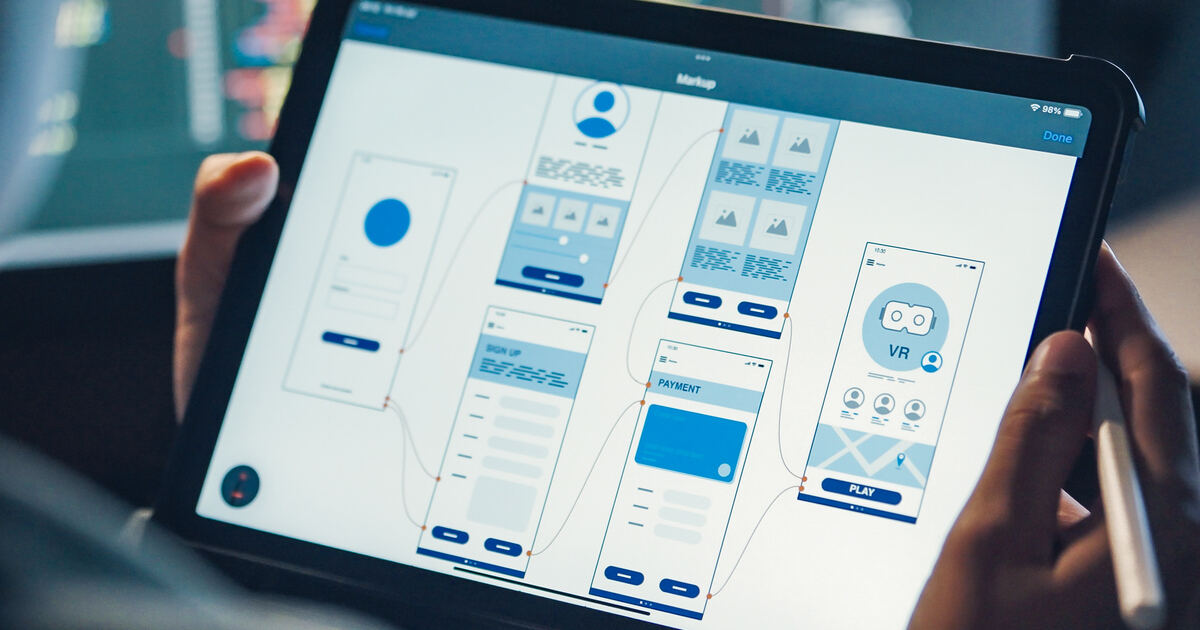
Conversion-Centered Design Framework
Conversion-Centered Design (CCD) is a targeted approach to web design that strategically blends psychology and analytics to encourage visitors to complete a specific action, referred to as a “conversion.” This could be making a purchase, signing up for a newsletter, or requesting a demo. Unlike conventional web design, which may emphasize overall aesthetics, branding, or general user experience, CCD puts measurable results at the forefront, focusing every design choice on driving immediate, purposeful user actions.
CCD is ideal for optimizing landing pages and key site areas to prompt users toward a clear goal. This approach employs seven essential principles to maximize conversions by reducing distractions, building trust, and guiding users’ attention:
- Clarity & Focus: Communicate your message simply and directly, and focus on one goal at a time, so visitors immediately understand the intended action without confusion or ambiguity.
- Structured Content: Page layouts should create a distinct flow, guiding users towards desired actions and supporting a positive user experience (UX).
- Consistent Experiences: Maintain consistency in branding, information hierarchy, colors, and content elements throughout the site to set expectations, create familiarity, and help users find what they’re looking for quickly and easily.
- Directional Cues: Use visual indicators like arrows, lines, or even the gaze of models to subtly direct attention toward your call-to-action (CTA). Place your CTAs in visually distinct containers and use bold, contrasting colors to make them stand out from surrounding elements.
- Trust Signals: Incorporate testimonials, customer reviews, security icons, and professional branding to reassure visitors and overcome hesitation.
- Visualized Benefits: Help users understand the value of your offering by visually showing the benefits in photos and videos placed strategically on the site.
- Minimal Friction: Whether your conversion is a newsletter signup, an asset download, or a product purchase, optimize conversion experiences to make the process as easy as possible.
By applying these principles consistently, CCD can transform your website from a passive information source into an active conversion engine. It ensures visitors are being gently guided toward the actions that matter most to your business, ultimately boosting your conversion rate and supporting long-term growth.
Key Conversion Elements to Include
Conversion elements that can be incorporated into website designs include headlines that highlight your product’s value, social proof elements like reviews or client logos, and clear, action-focused CTAs to prompt immediate engagement.
Compelling, Value-Driven Headlines
Your headline is the gateway to your product or service. It should immediately communicate what sets you apart, addressing a specific pain point or need your audience faces. Rather than using a generic greeting like “Welcome,” focus on headlines that highlight a clear benefit or solution, such as “Save 20% on Your Energy Bills with Our Smart Thermostat.” Position your headline prominently at the top of the page to capture attention and provide visitors with a powerful incentive to explore your site further.
Strategic Social Proof (Testimonials & Reviews)
Building trust is essential for driving conversions. Display authentic customer testimonials, star ratings, detailed reviews, or case studies to reassure visitors that others have benefited from your offering. Adding recognizable client or partner logos, user success stories, and impactful statistics like “Trusted by Over 3,000 Companies” enhances your credibility. Place these endorsements near your calls-to-action or signup forms so that visitors see them at key decision points and feel confident moving forward.
Clear, Action-Oriented CTAs
Guide users decisively toward conversions with concise, bold, and benefit-focused calls-to-action. Use direct and specific phrases such as “Start Your Free Trial,” “Download the Guide,” or “Book a Consultation.” Ensure your CTA buttons stand out by using distinct, contrasting colors and placing them intuitively, immediately after your headline or social proof elements, to create a natural flow toward action. To further motivate users, incorporate urgency (for example, “Limited Spots Available” or “Offer Ends Soon”), which encourages immediate engagement and reduces hesitation. Keep CTAs accessible by implementing sticky CTAs and floating navigation bars to make sure users always have an easy way to take the next step.
Best Practices for Website Conversion Optimization
These proven strategies, grounded in conversion rate optimization (CRO) research and modern design principles, empower teams to continuously iterate and boost website performance:
- Embrace Mobile-First Design: Ensure your site is fully responsive and optimized for all devices, prioritizing mobile usability to reach the widest audience and minimize bounce rates.
- Leverage White Space and Intuitive Navigation: Maintain ample breathing room around content to keep the layout clean and uncluttered, reducing cognitive overload. Implement straightforward navigation so users can effortlessly find key information and conversion points.
- Drive Action with Urgency: Motivate quick decisions by highlighting time-sensitive offers or limited availability, making users feel compelled to act now rather than later. You can create a sense of immediacy through countdown timers, limited-time offers, or low-stock notifications. These tactics encourage users to make decisions promptly, reducing hesitation and increasing the likelihood of conversion.
- Establish a Clear Visual Path to Conversion: Use strategic layout, contrasting colors, and directional cues to guide visitors seamlessly toward your calls-to-action, making the desired next step obvious and accessible.
- Reduce Friction at Conversion Points: Streamline forms by limiting required fields, accelerate page load times, and eliminate unnecessary steps to create a smooth, hassle-free experience that encourages completion.
Homepage & Landing Page Optimization Tips
Maximize conversions on your homepage and landing pages by focusing on three strategies: above-the-fold clarity, targeted messaging for each page type, and ongoing A/B testing of visual elements and layout.
- Above-the-Fold Clarity: Make sure your most important content, including a compelling headline that communicates your value proposition, a concise summary of your offering, and a bold call-to-action, is immediately visible as soon as visitors land on the page. By delivering your core message up front, you can reduce bounce rates and quickly engage users before they consider leaving.
- Focused Messaging Per Page Type: Customize your content to match user intent. On your homepage, highlight your primary brand promise and showcase your main offerings. For landing pages, concentrate on a single product, service, or campaign and eliminate unnecessary links or distractions, making it easy for users to focus on the desired action.
- A/B Testing Visuals and Layout: Continuously experiment with different images, headlines, layouts, and button placements to identify what best resonates with your audience. Use the insights from these tests to fine-tune pages, ensuring your design and messaging drive optimal engagement and higher conversion rates.
Examples of High-Converting Websites
The most effective websites build trust, attract new users, and nurture loyal customers by being secure, fast, user-friendly, and optimized for mobile devices. These qualities are essential for driving conversions and creating positive user experiences. At Americaneagle.com, we’ve designed and launched conversion-focused websites for B2B and B2C clients across nearly every industry.
Choose Your Gift (CYG) specializes in employee gift-pricing programs, placing a strong emphasis on branding and user experience. CYG partnered with Americaneagle.com to enhance their website, which now showcases a sophisticated color palette and thoughtfully selected fonts, establishing a memorable brand identity. Enhanced navigation makes it easy for corporate clients to manage gift and plan purchases. The site further improves user satisfaction with a simplified checkout process, ensuring that selecting and sending gifts is quick and hassle-free. Following these changes, CYG saw a 47% increase in online transactions and a 97% increase in revenue year-over-year.
Legal & General American (LGA) is one of the country’s leading life insurance companies, providing customers of all types with dependable and affordable life insurance. Together, LGA and Americeangle.com implemented a new content and analytics platform that gave the LGA website new customer-focused features and a completely rebranded look. Thanks to the new site architecture, design elements, and other improvements, LGA saw a 27% increase in conversion rates for sales year-over-year.
These examples demonstrate how strategic, user-focused web design, especially when paired with mobile optimization and intuitive navigation enhancements, can significantly boost conversion rates. For more inspiration, explore our portfolio to see how Americaneagle.com elevates website design to drive measurable results for our partners.
Mistakes That Hurt Website Conversions (& How to Avoid Them)
Even visually impressive websites can struggle to convert visitors if they fall into common UX or CRO pitfalls. Below are frequent mistakes that can negatively impact your website’s ability to turn visitors into customers, along with tips on how to address them:
Too Much Clutter or Noise
Overloading your pages with excessive text, images, pop-ups, or animations can overwhelm visitors and make it difficult for them to focus on the most important information. To avoid this, keep your layout clean and prioritize essential content. Use whitespace strategically to guide the user’s attention and eliminate any distracting or unnecessary elements.
Weak CTA Language or Placement
If your calls-to-action are vague, hidden, or styled so users can’t easily identify them, you risk losing potential conversions. Ensure your CTAs stand out by using strong, action-oriented language, contrasting colors, and positioning them in prominent locations, such as at the top of the page or within sticky navigation bars, so they’re always accessible as users scroll.
Confusing Navigation or Hidden Forms
Complex menus, unclear labels, or forms that are buried deep within your site can frustrate users and cause them to abandon their visit. Simplify navigation by organizing links logically and using intuitive labels. Make forms easy to locate and complete by minimizing the number of required fields and providing clear instructions.
Not Optimized for Mobile
With more users browsing on smartphones and tablets, a website that isn’t mobile-friendly can lead to poor experiences and high bounce rates. To prevent this, use responsive design techniques so your site adapts to different screen sizes. Make sure buttons, forms, and images function smoothly on all devices, and prioritize fast load times on mobile networks.
By recognizing and addressing these mistakes, you can create a more user-friendly and conversion-focused website that performs well across devices and effectively guides visitors toward your desired actions.
Audit Your Website & Identify Conversion Opportunities
Conducting a website audit can help uncover the hidden factors that are either supporting or hindering your conversion rate. By thoroughly evaluating your site, you can gain a clearer understanding of the elements influencing user behavior and overall performance.
To gather meaningful insights, utilize tools such as heatmaps, session recordings, and form analytics. These resources help you visualize how visitors interact with your pages, identify patterns, and pinpoint areas where users may be experiencing friction or dropping off.
When reviewing your website’s effectiveness, focus on key metrics like bounce rate, time on page, and conversion rate. These data points offer a snapshot of user engagement and can help you determine which areas need immediate attention.
After collecting and analyzing this information, prioritize implementing high-impact fixes. Start with improvements to your calls-to-action, optimize your site’s load speed, and enhance design clarity. Addressing these areas first will yield the most significant improvements in user experience and conversion performance.
When to Bring in a Professional Team
If your team is stretched thin or lacks specialized expertise, partnering with a conversion-focused digital agency like Americaneagle.com can be a gamechanger. Our proven approach to auditing, testing, and redesigning websites is tailored to drive measurable improvements in performance and maximize your return on investment.
By entrusting your site to experienced professionals, you can unlock powerful strategies and cutting-edge solutions to elevate your brand, enhance conversions, and help your business achieve its growth goals faster and more efficiently.
Final Thoughts: Build a Site That Works as Hard as You Do
Driving traffic to your website is a complex (and often costly) challenge. But those efforts can be wasted if your site isn’t designed for conversions. When you really get to know what your audience cares about and focus on proven design principles, your website becomes more than just a page on the internet. It turns into a true growth engine for your business. By centering design decisions around conversions and always looking for ways to test and improve, you’ll not only attract more visitors, but also motivate them to take real, meaningful actions.
The best websites are those that strike the perfect balance between creative flair and smart, data-driven decisions. They don’t just look good; they produce results you can see and measure.
If you’re ready to see what your website is capable of and want to spark genuine growth, consider teaming up with the experts at Americaneagle.com. Our friendly, knowledgeable experts specialize in building custom websites, improving user experiences, and crafting digital strategies that fit your brand’s unique goals. Contact us today and let us help you transform your site into a conversion powerhouse.
Related FAQs
What are the 7 principles of conversion-centered design?
The seven essential principles of conversion-centered web design are: clarity and focus, structured content, consistent experiences, directional cues, trust signals, visualized benefits, and minimal friction. Together, they create attractive, user-friendly sites that deliver real results.
How do I increase my website conversion rate?
To increase your website conversion rate, make your site easy to use, fast to load, and trustworthy. Use clear buttons, show reviews, and keep the checkout simple. Test different variations to see what works best.
What is conversion-centered design?
Conversion-centered design (CCD) is an approach to website development that encourages visitors to take a specific action, like buying something, signing up, or downloading a file. It uses smart design and an understanding of what motivates people to make the process easy and clear, helping turn visitors into customers. Every part of the site is created to support your business goals, not just to look good.
What makes a website convert better?
High-converting website design makes things easy for users, utilizing simple menus, quick loading times, and layouts that help visitors reach a goal. Important features include clearly identifiable buttons, mobile-friendly pages, trust signals, and clean, uncluttered designs.
What is the best layout for a high-converting landing page?
The best high-converting landing page uses a simple, single-column layout with one clear goal. It features a strong headline, an easy-to-find call to action, and trust signals like testimonials or logos. Remove extra navigation, use convincing words, and make sure important information stands out.