


Content mapping is all about making your marketing smarter, your website easier to use, and helping your business show up in search results. Instead of just creating content for the sake of it, content mapping means you’re thinking about your audience every step of the way. You’re asking: What do people need when they first hear about us? What questions do they have before they decide to buy? By answering those questions with the right information at the right time, you build trust and make it easier for visitors to find exactly what they need.
When you approach content this way, your website becomes more helpful for users, as they can quickly find answers and solutions, which keeps them engaged and coming back. For your marketing, it means every blog, guide, or video has a clear purpose and supports your bigger goals. Plus, by organizing your content around what people are searching for, your site becomes more visible to search engines like Google.
In this article, we’ll break down what content mapping really means and walk you through creating your own content map. You’ll learn about important pieces like defining your audience (personas), understanding their journey, picking the best types of content, and setting clear goals. We’ll also share templates and frameworks to make the process easier, recommend some useful tools, and offer tips for monitoring and improving your strategy, plus a heads-up on common pitfalls to watch out for.
At Americaneagle.com, we’re here to help you make sense of content mapping and use it to reach your business goals. Our team knows how to build effective content maps that support your marketing and connect with your customers.

What is Content Mapping?
So, what is content mapping? It’s a strategic approach to creating content that’s relevant, informative, and valuable for your target audience at every interaction with your brand. Content mapping is a big component of any content strategy, helping you uncover new ways to engage your audience and spark interest in your offerings.
Content mapping aligns content with user needs throughout the buyer’s journey. It uses user personas, data-driven profiles of your ideal audience, to guide strategy and ensure your content stays relevant and supports both users and business goals.
For example, consider new parents searching for information about baby allergic reaction triggers. In the awareness stage, they might encounter blog posts discussing the safety of hypoallergenic linen clothing and crib sheets. During the decision phase, they may receive targeted ads for linen bundles that match their changing needs.
Key Elements of a Content Map
Let’s break down the main components of an effective content map, including user personas, buyer journey stages, content types, and measurable goals.
- Start by defining detailed user personas, mapping them to each stage of the brand relationship funnel from awareness, consideration, and decision.
- Next, is identifying the specific types of content that best serve your audience at each stage, such as blog posts for awareness, comparison guides for consideration, or case studies for decision.
- Finally, set clear goals and KPIs for each content piece, that way every part of your content strategy map is tied to business objectives and user needs. This approach creates a cohesive content journey map, making it easier to measure what’s working and optimize your strategy.
Persona Examples for Content Mapping
Using "Solo Traveler Bill" as a content mapping example, we see how a well-defined persona shapes an effective content journey. Bill, a 38-year-old location-independent software engineer based in San Diego, values efficient travel planning, immersive cultural experiences, and consumes content via travel blogs, social media, and review platforms.
A content strategy for Bill should prioritize:
- Articles on safe solo male travel
- Guides to connecting with locals and other travelers
- Reviews of solo-friendly accommodations and tours
- Videos highlighting authentic culture and remote work setups
Matching content to Bill’s preferences builds stronger engagement and business results. When crafting content maps, distinguish B2C from B2B journeys: B2C personas like Bill require focus on demographics and lifestyle, while B2B mapping prioritizes job role, industry, and decision authority. Also, differentiate between buyer personas (decision-makers) and reader personas (content consumers), especially in B2B, to tailor tone, messaging, and funnel strategies for greater impact.
Why Content Mapping Matters for Website Strategy
Content mapping offers various business benefits by improving conversions, user engagement, SEO, and overall user experience. Strategically placed calls-to-action and clear website pathways help guide visitors toward goals like purchases or signups, benefiting marketing and ecommerce teams with a structured plan for optimizing user journeys.
As a visual hierarchy tool, content mapping organizes site content, identifies gaps, and assigns each item to its best location, supporting effective publishing and solid information architecture.
Personalized content mapping increases engagement and loyalty by tailoring material to specific personas at different journey stages. Marketers use these tools to ensure relevant content at every touchpoint.
Without content mapping, even high-quality assets may miss their mark, as unplanned publishing can misalign with audience needs or objectives. Mapping ensures that all content has a purpose tied to personas, funnel stages, and measurable goals.
Therefore, content mapping changes content marketing from reactive to proactive, ensuring each asset supports strategic objectives and delivers a seamless, engaging experience.
How to Create a Content Map (Step-by-Step)
To develop an effective content map, start with a clearly documented content strategy. This provides direction and aligns your map with business objectives. Your content map acts as a tactical blueprint, turning high-level goals into actionable plans through precise audience targeting and content planning.
- Clarify objectives and define personas: Identify your primary business goals and pinpoint the personas you want to reach. This step helps keep your content audience-centric from the outset.
- Conduct a thorough content audit: Review all existing assets to determine what’s working, what’s missing, and where overlaps occur. This evaluation helps you understand your current landscape and informs future planning.
- Spot gaps and redundancies: Analyze the audit findings to reveal areas where additional content is needed or where unnecessary duplication exists. Addressing these will make your content ecosystem more efficient and impactful.
- Align content with funnel stages: For each stage of the buyer journey, research and select keywords that mirror your persona’s search intent. During the awareness stage, focus on informational queries (e.g., “how to save time as a busy mom”). As prospects move to the decision stage, target comparison or product review keywords (e.g., “best CRM for small businesses”).
- Visualize your map using templates or digital tools: Bring your content plan to life through diagrams, spreadsheets, or specialized mapping platforms. Visualizing helps stakeholders understand the structure and flow of your content strategy.
Check out this “4 Steps to Creating Your Content Strategy” webinar to learn more!
Content Mapping Templates and Frameworks
Get started with a blank content mapping template to organize your work clearly. This template is designed to help you visually structure your ideas, track progress, and ensure nothing important is overlooked while planning projects or assignments.
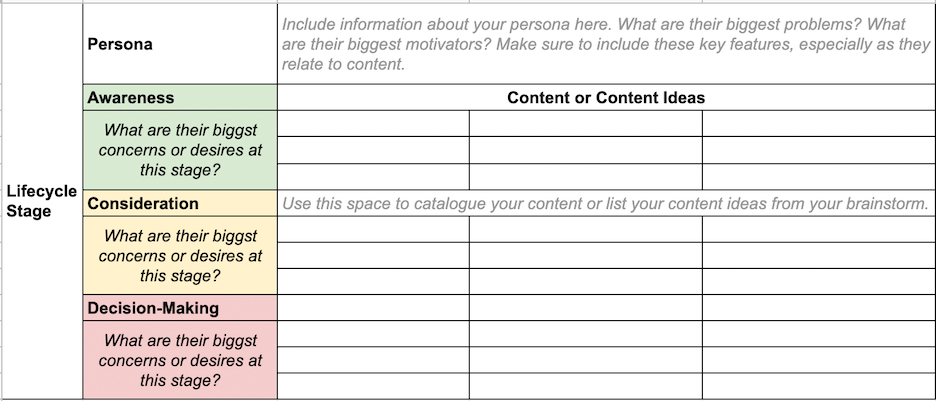
At Americaneagle.com, we simplify content planning for our clients using proven frameworks. Our mapping spreadsheets organize key elements such as Buyer Stage, Persona, User Questions, Content Assets, and Target Keywords. By visually presenting content strengths and gaps, we quickly identify opportunities and make sure your message reaches all relevant audiences.
Monitor & Optimize Your Content Map
Want to get more out of your content map? Start by using analytics tools like Google Analytics (GA4), Google Search Console, Looker Studio, or HubSpot to track how your content’s performing. Keep an eye on important metrics, including engagement, conversions, and what’s working for each persona, and don’t be afraid to run A/B tests to keep things improving.
If you’re up for a deeper dive, Semrush Keyword Gap makes it easy to see where you stack up against competitors and spot fresh topic ideas. Make sure your content map stays collaborative and updated by using platforms like Google Sheets or Notion so your team can easily track personas, funnel stages, and topics.
Kick things off with an audit of your current assets by funnel stage and persona. This will help you see what’s already working, what’s missing, and what content you can repurpose. Organize everything clearly so you can quickly spot any mismatches.
When deciding on new content, focus on:
- Buyer stages or personas that aren’t getting enough attention
- Persona journeys that deliver real ROI
- Content types that perform well or are budget-friendly
- Channels you haven’t fully explored yet
Create a content production roadmap and revisit it every month or quarter to stay on top of things. Don’t forget to regularly update your pages using AI tools like seoClarity’s Content Fusion or Surfer SEO, plus add in relevant keywords and subtopics to keep your content competitive.
Best Content Mapping Tools and Software
Looking for highly rated content mapping tools to help you plan out ideas, work with your team, and see everything clearly? There are plenty of great options out there. These tools make it easier to visualize your plans, keep everyone on the same page, and review your content. Check out the chart below to see how platforms like Lucidchart, Miro, Airtable, and Trello might be a great fit for you.
| Tool | Key Features | Primary Use |
|---|---|---|
Lucidchart |
| Mapping |
Miro |
| Mapping |
Trello |
| Mapping |
Ahrefs |
| Keyword Research |
Semrush |
| Keyword Research |
Content Mapping Examples to Inspire Your Strategy
Explore how top brands in B2B, ecommerce, and SaaS bring their content strategies to life through smart content mapping:
- Shopify: Shopify goes beyond just providing an online store platform—they actively build trust and drive traffic by publishing blogs, videos, podcasts, and creating an active community forum. By tailoring their content to match each phase of the buyer’s journey, Shopify helps potential customers find answers at every step. Their secret? They optimize for the right keywords, ensuring their expertise shows up when businesses are searching for solutions.
- Trello: Trello’s blog isn’t just a product showcase; it’s a resource hub for teams everywhere. By organizing articles around topics like productivity, remote work, and enterprise collaboration, Trello makes it easy for users to discover practical tips that fit their workflow. Plus, with content available in six different languages, Trello’s approach makes users across the globe feel right at home, no matter where they’re working from.
- Omnisend: Omnisend takes pride in empowering ecommerce marketers. Their content library covers everything from in-depth blogs and industry reports to ebooks, podcasts, and hands-on training videos. Every piece of content is designed to answer real questions and provide step-by-step guidance, helping marketers get the most out of Omnisend and succeed with their campaigns.
Each brand’s content map reflects their goals, like getting more website visitors, keeping people interested, or helping customers move through the sales process. Their approach is about more than just sharing information; it’s about building connections and helping users at every stage.
Common Challenges in Mapping Content
It’s common for businesses to experience obstacles when making content maps. If your buyer personas are outdated, your content might miss the mark. Disorganized data can make it hard to find what you need. Teams often work separately, so good ideas don’t get shared, and when different departments aren’t in sync, your messaging can get confusing.
To fix these issues, check and update your personas and content often. Keep your data organized and easy to use. Get teams like marketing, sales, and product working together. Use tools that keep everyone connected and on the same page.
Americaneagle.com knows these challenges well and is here to help. We support you by reviewing your current content, updating personas, creating new content, and building a clear content map. Our goal is to make the process simple and collaborative, so you can connect better with your audience and see real results.
How Americaneagle.com Can Help You Create a High-Impact Content Map
Let Americaneagle.com help you get the most out of your content strategy. Our friendly, knowledgeable team will work closely with you to create, fine-tune, and bring your content map to life, while always keeping your unique business goals in mind.
We handle everything from in-depth content audits and fresh persona research to planning, creating, and mapping out your content in a way that’s easy to understand and use. Whether you want to grow your website traffic, connect better with your audience, or make your message clearer, we’re here every step of the way.
Interested in seeing how we can help? Reach out for helpful resources or set up a one-on-one content consultation to get started.