


From Waterfall to Agile: The Evolution of Software Development
The first software I worked on had to be installed from multiple CDs and came in a 5-pound box. The waterfall development process used back then was designed to mitigate bugs, but inevitably, some would get through. Getting updates and patches to users could take months.
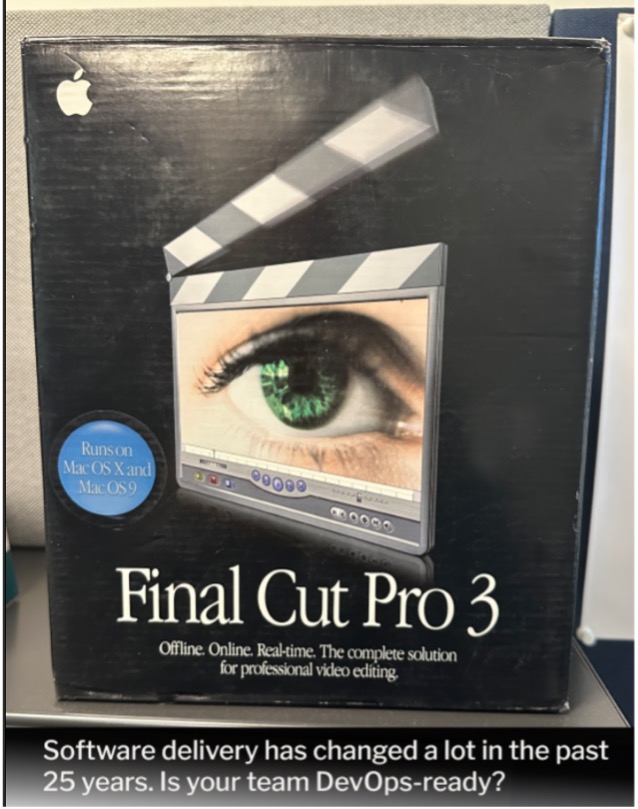
The internet eventually changed all that. Software could be updated anytime. This gave rise to Agile Development, where iterative updates could be deployed more frequently. Two-week sprints replaced 12 to 18-month release cycles. Customer feedback loops shrank from months to weeks.
How Cloud Computing Accelerated Agile Development
Cloud computing turbocharged this, as it offered infinite scalability on demand. The majority of software became "as a Service." No more waiting months for servers; provision and scale in minutes. The cloud's elasticity perfectly matched Agile's velocity. Teams could finally deploy nearly as fast as they could develop.
The Rise of DevOps: Merging Development and Operations
Enter DevOps; the fusion of development and operations into continuous flow. Not just tools and automation but removing the friction between development and IT teams. At a high level, this involves Infrastructure as Code (which enables cloud software to automatically provision the resources it needs), automated testing, continuous deployment, and security that is "shifted to the left," meaning it's built in earlier in the process which makes it much less expensive while reducing risk.
But a gap has emerged.
The Cloud Adoption Gap: Why Many Organizations Still Struggle
Nearly 20 years after the cloud, organizations are still struggling to utilize the cloud for software deployment fully. Development teams sprinted ahead with new deployment tools while operations teams still struggled with manual deployments. And changes still get caught up in old methodologies... advisory boards or “gates,” or get ticketed and handed off to a siloed team. My Americaneagle Managed Cloud Services (AEMCS) colleague, Paul Kocan, explained he recently helped a SaaS-based software development team adopt DevOps. They had been taking 30 days to deploy critical software updates. In contrast, the actual development time was just 6 hours. The rest? Lost to silos and waiting.
How AEMCS Bridges the Gap to True DevOps
Americaneagle Managed Cloud Services builds on 30+ years of Americaneagle.com’s experience developing and managing mission-critical web and cloud-based applications. We've deployed thousands of revenue-generating sites, learning that successful DevOps requires cultural transformation, not just pipelines and tools. Not only will our team set up the tools for optimal DevOps for our client's applications, but we'll also provide the best-practices framework between developers and IT operations needed to take full advantage of the cloud as a deployment model.
Embedding DevOps expertise into managed cloud services makes releases safer, reliability predictable, and pipelines audit-ready. It also helps to aligns developers and IT, cuts handoff time, and delights customers with fast releases.

Accelerate Your DevOps Journey
As part of our no-cost cloud audit, AEMCS will assess your development process and provide suggestions on areas where DevOps practices can provide improvement. The cloud-enabled speed: Agile demands it; and DevOps delivers. AEMCS can help you get there. Visit www.aemcs.com to learn more.